
Empty the Canvas
On wiping out, starting over, and finding the painting underneath

I came back from Catalunya with photographs of hands and a head full of ideas…
and I made a mess of both of them.
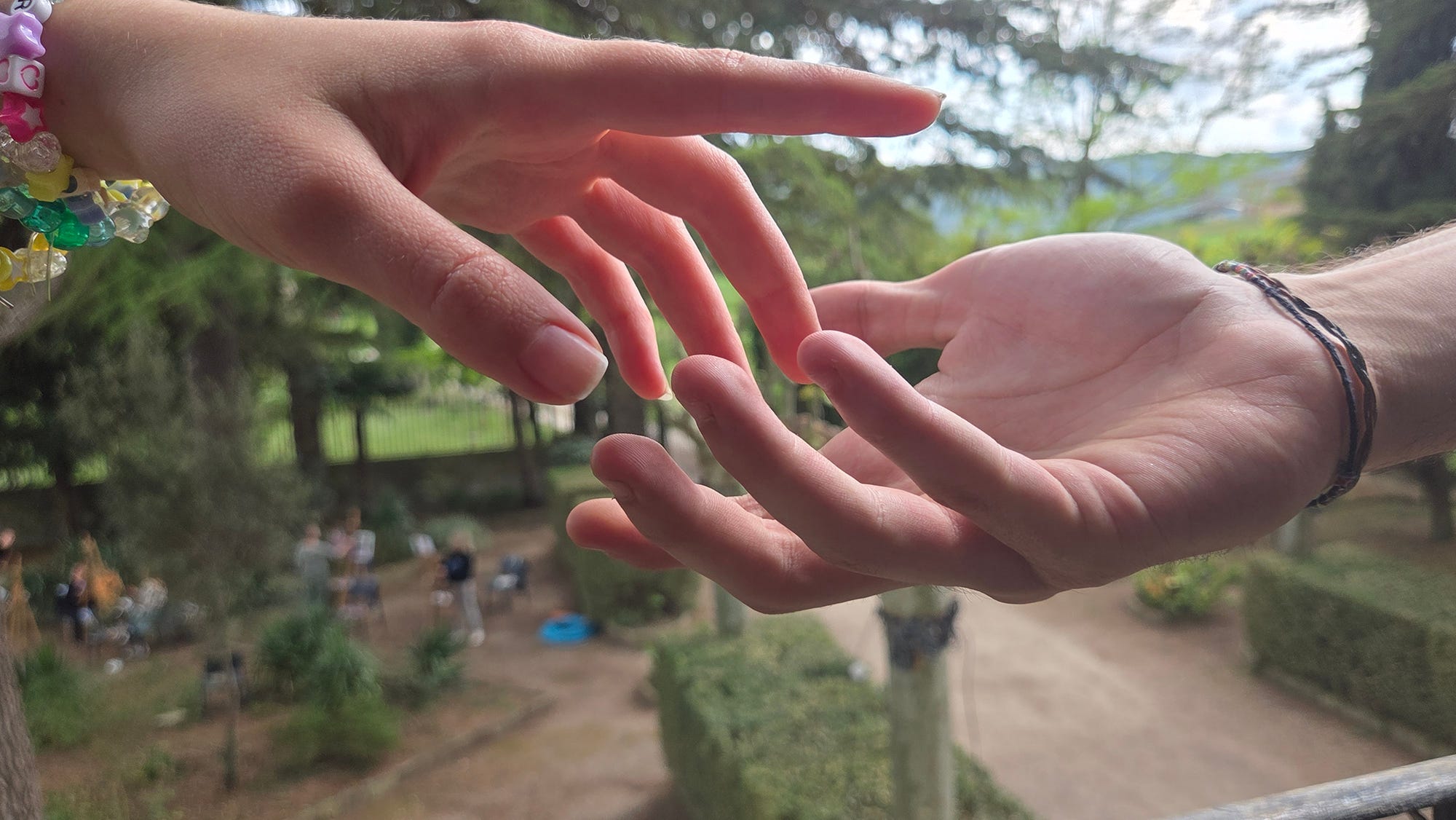
The first attempt happened at the retreat itself, in that particular Mediterranean golden light that feels like it is being poured rather than cast. I photographed two models reaching toward each other and thought I knew what I was going to paint. This is where I write something, something about artistic hubris in the moment before their downfall...
I was wrong. The piece didn’t have it. I was struggling with this feeling of something not quite working the way I wanted. I moved on, told myself I would solve it at home.
At home I made a second mess. I worked and reworked the canvas until I was overworking everything, adding and adjusting and correcting my corrections, getting further from the thing I actually wanted to say. I was answering questions the painting wasn’t asking.
So I wiped it out and it felt like relief.
Good ol’ Bruce Lee wrote: “Be like water making its way through cracks. Do not be assertive, but adjust to the object, and you shall find a way around or through it. If nothing within you stays rigid, outward things will disclose themselves.”
I had been rigid. I had been assertive in exactly the wrong direction; pushing harder at something that wasn’t working, as if effort alone could fix a broken idea. Wiping the canvas wasn’t defeat. It was the moment I finally stopped fighting the painting and let myself move around the problem instead.
But before I could pick up a brush again, I had to go back to the idea itself. What was I actually trying to say?
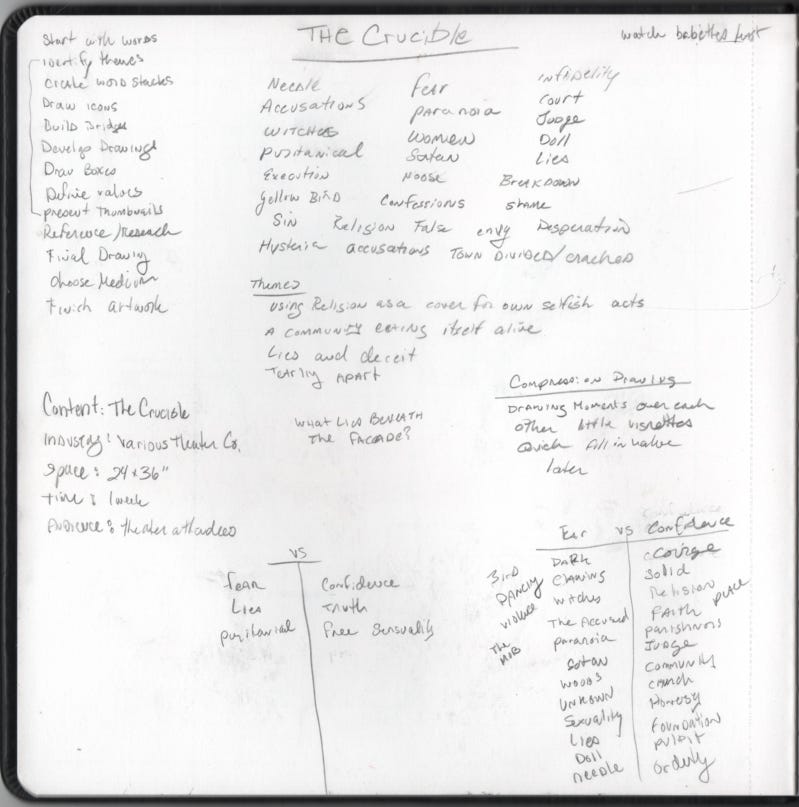
Two of my teachers have given me nearly the same lesson in different languages. In Sterling Hundley’s Ideacraft course, he taught us to excavate an idea through lists. You write every word that surfaces when you think of your subject, then pick a few and make new lists around those, then find the opposites of what you’ve chosen. Opposition creates tension. Tension creates meaning. From the words you pull icons, and from icons you pull pictures. It is a method for making the invisible visible.
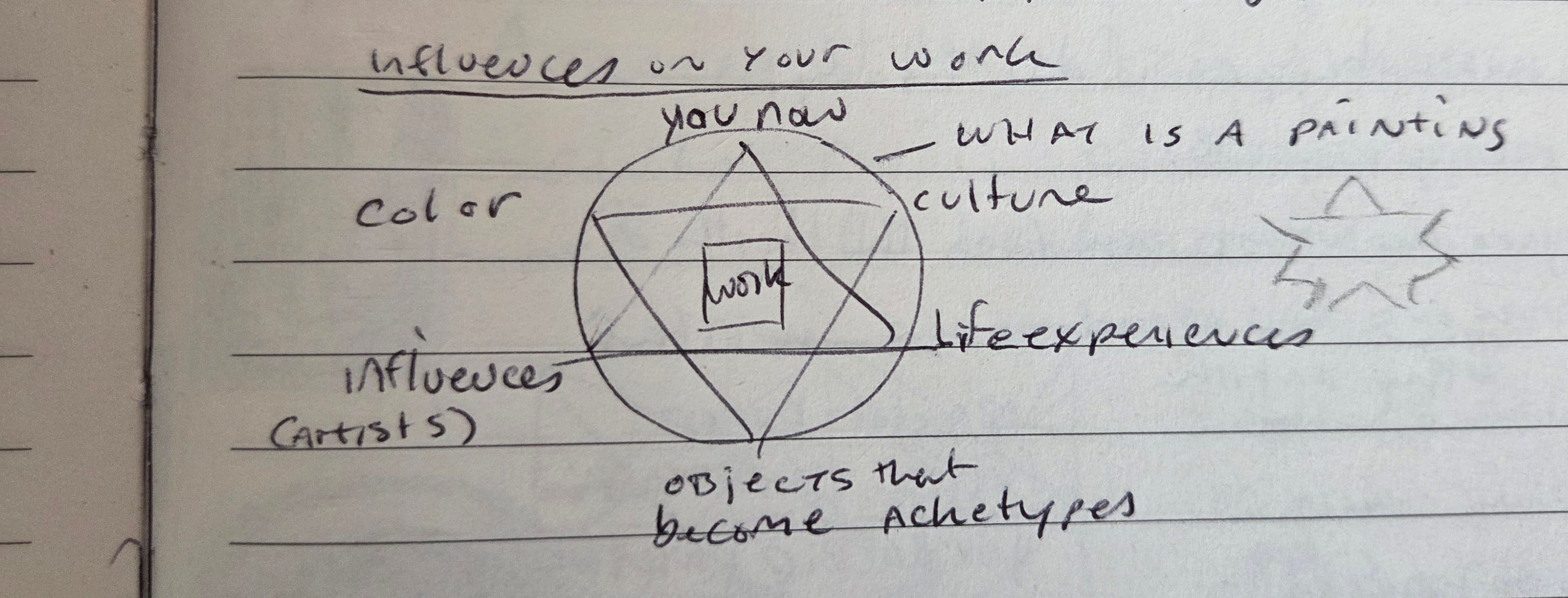
Edward Povey does something similar, but approaches the idea from the totality of a life. He has you build lists of color, atmosphere, influence, objects that have become archetypes, elements in art that move you, experiences that shaped you, what a painting means to you, and who you are right now. Out of all of that comes a kind of self-portrait in fragments, and somewhere in those fragments is the painting you were always going to make.
I went back to both of these. I made my lists in my head and I found my way back to the idea underneath the failed image.
The painting is about the space between the hands.
Are they reaching toward each other, or pulling away? Will they meet or won’t they? That question is the whole painting and I didn’t want to answer it. What I wanted to explore was something more interior than that: the lover we construct in our minds. The one built from longing and projection and the soft architecture of dreams. The one who may or may not correspond to the real person.
At Riven I had thought to paint both hands completely, both people equally present and real. But something felt wrong. The imagined lover was too heavy, too solid. You can’t make a dream weigh the same as a dreamer.
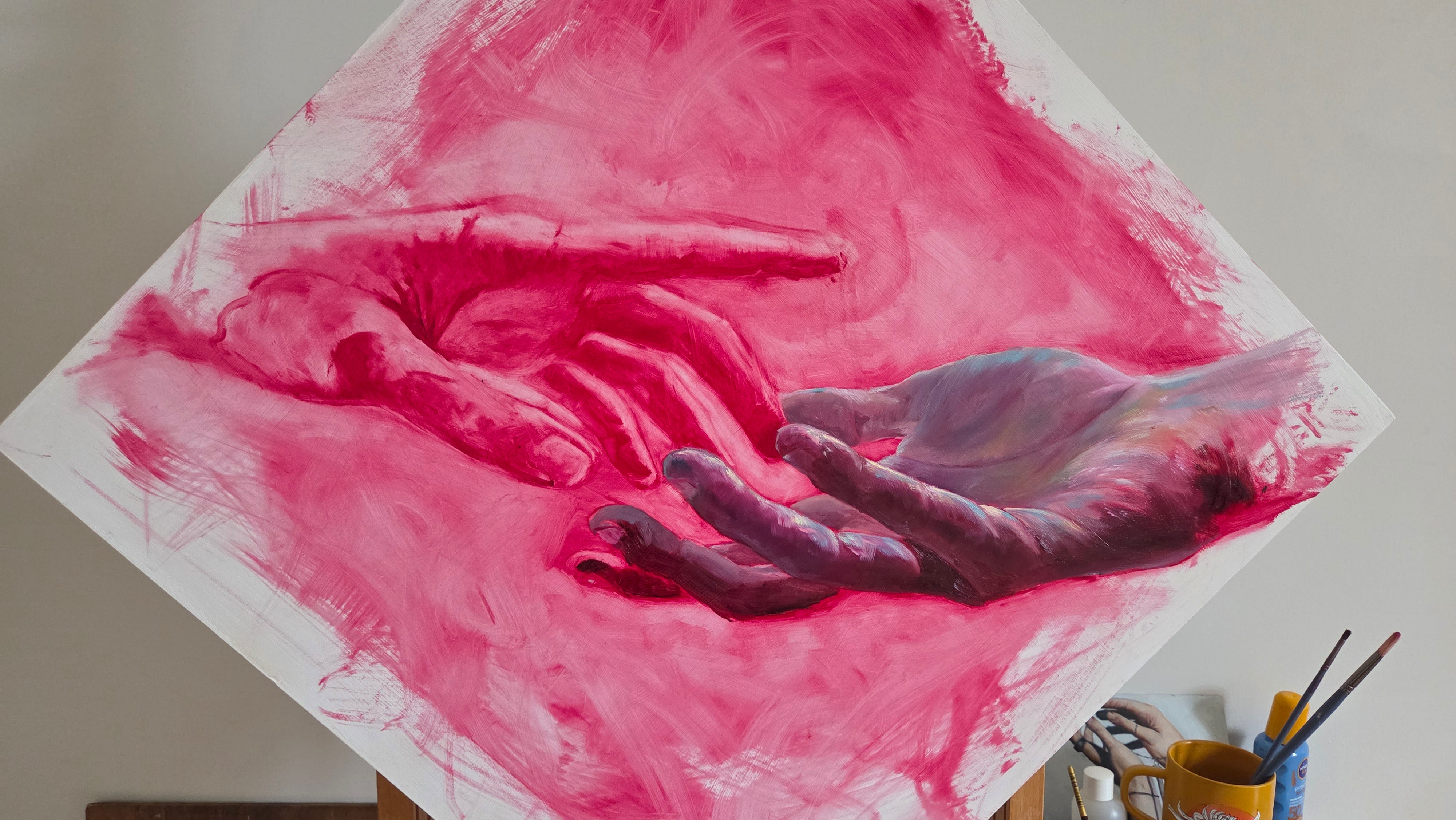
When I got home I tried sketching the second hand faintly, as if the dreamer were drawing it in their mind. That wasn’t it either. Too literal and not really compelling. I just wasn’t feeling it.
In trusting in my mentors, my thoughts drifted to Caravaggio and Phil Hale. I thought about chiaroscuro; the way light doesn’t just reveal, it also chooses what to leave in darkness. And I thought “what if the dream hand is only partially real? What if it surfaces from the darkness the closer it gets to the other hand; becoming more solid, more present, more alive, only because the dreamer is reaching for it? Without the dreamer, the dream doesn’t exist. The hand that is imagined only takes shape in proximity to the hand that is real.”
I knew what I wanted. Getting there was another matter.
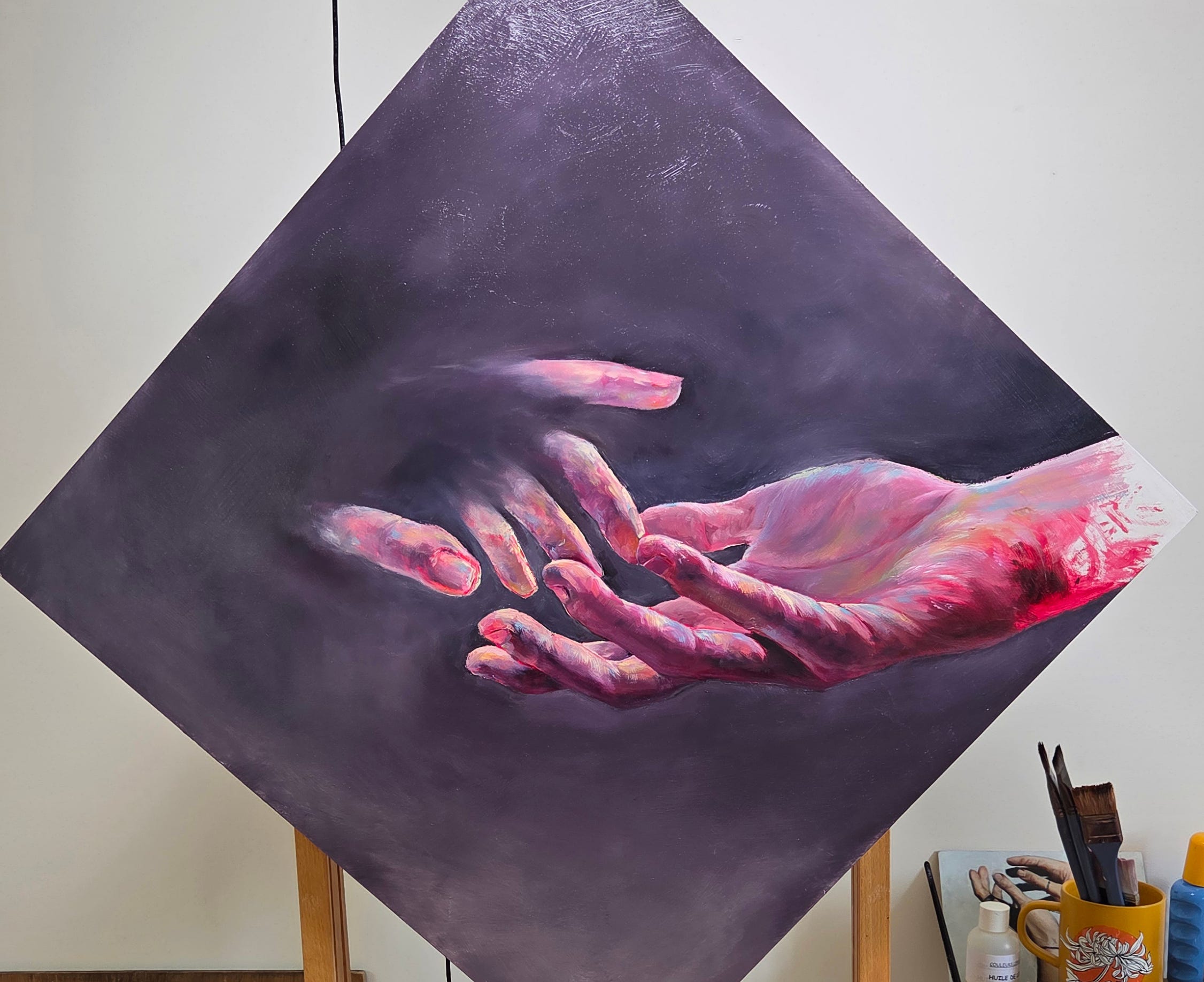
I first painted only the fingertips emerging from the dark. But they looked too separate, too adrift; like they belonged to a different painting entirely. All the visual weight sat on one side, and the composition felt unresolved.
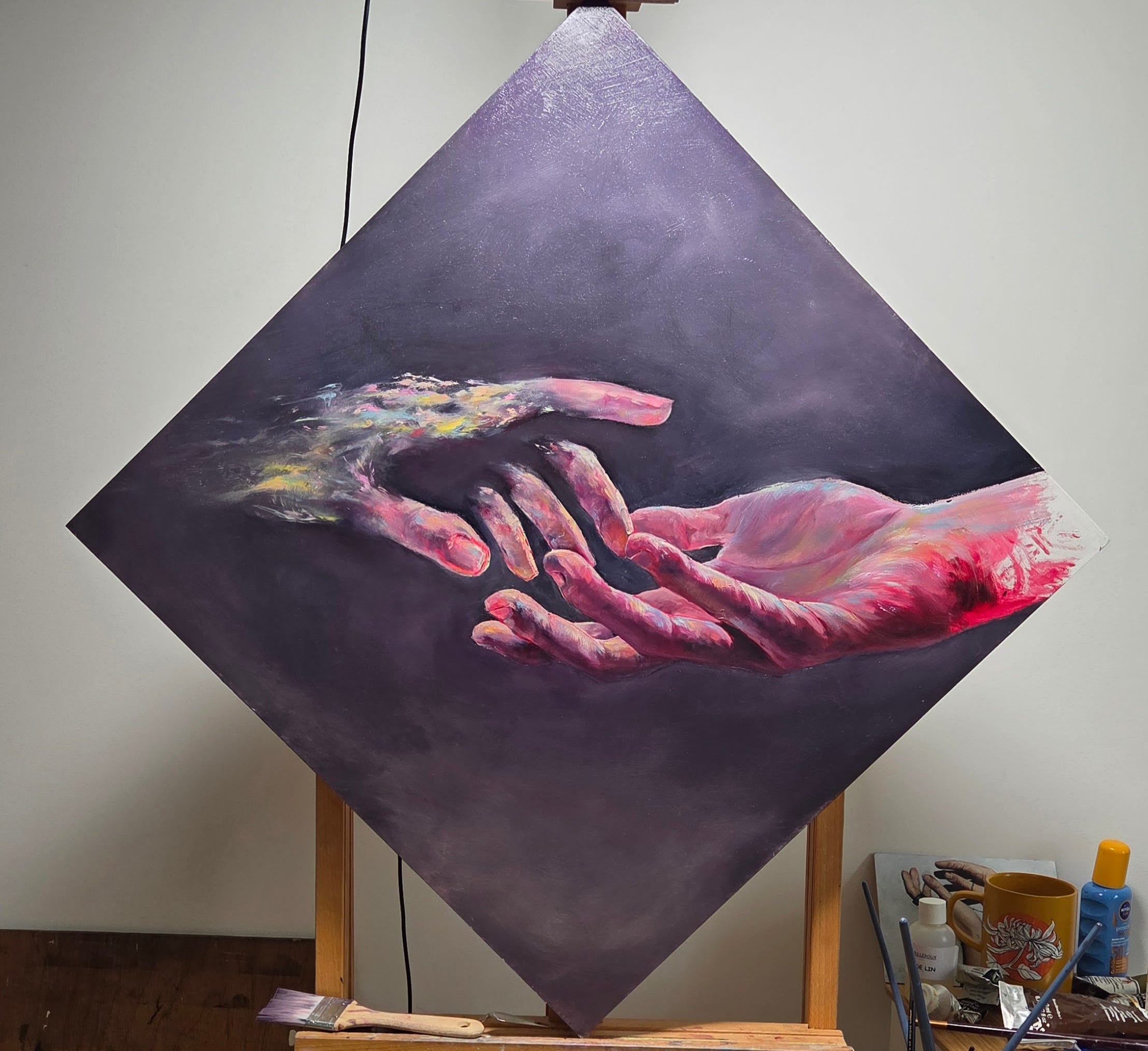
So I tried something else: letting the dream’s hand dissolve into ribbons of rainbow light. It was a beautiful idea in theory. In practice, the color balance fell apart. I went too yellow, and the warmth I was after curdled into something garish. The painting was fighting me again.
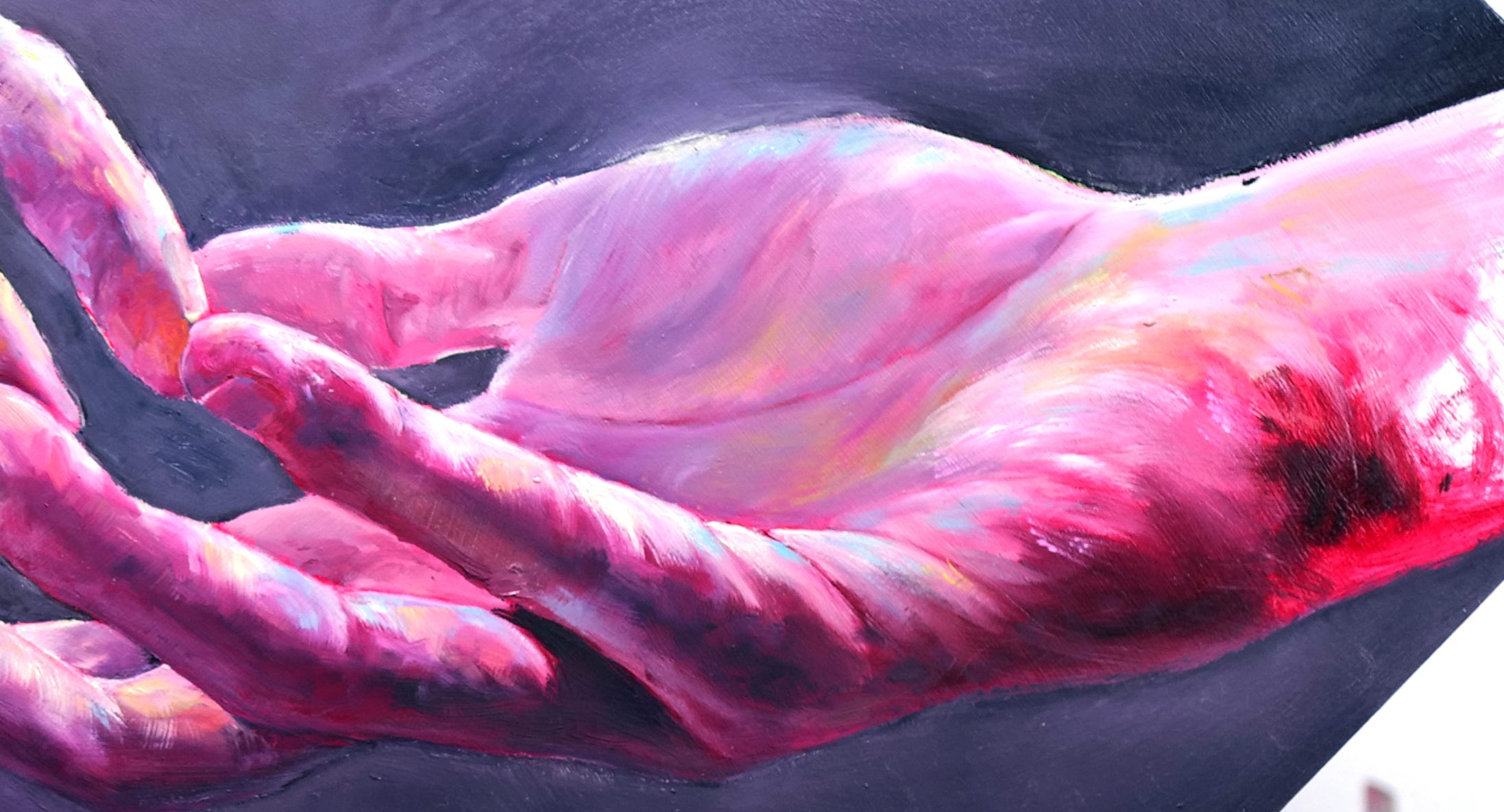
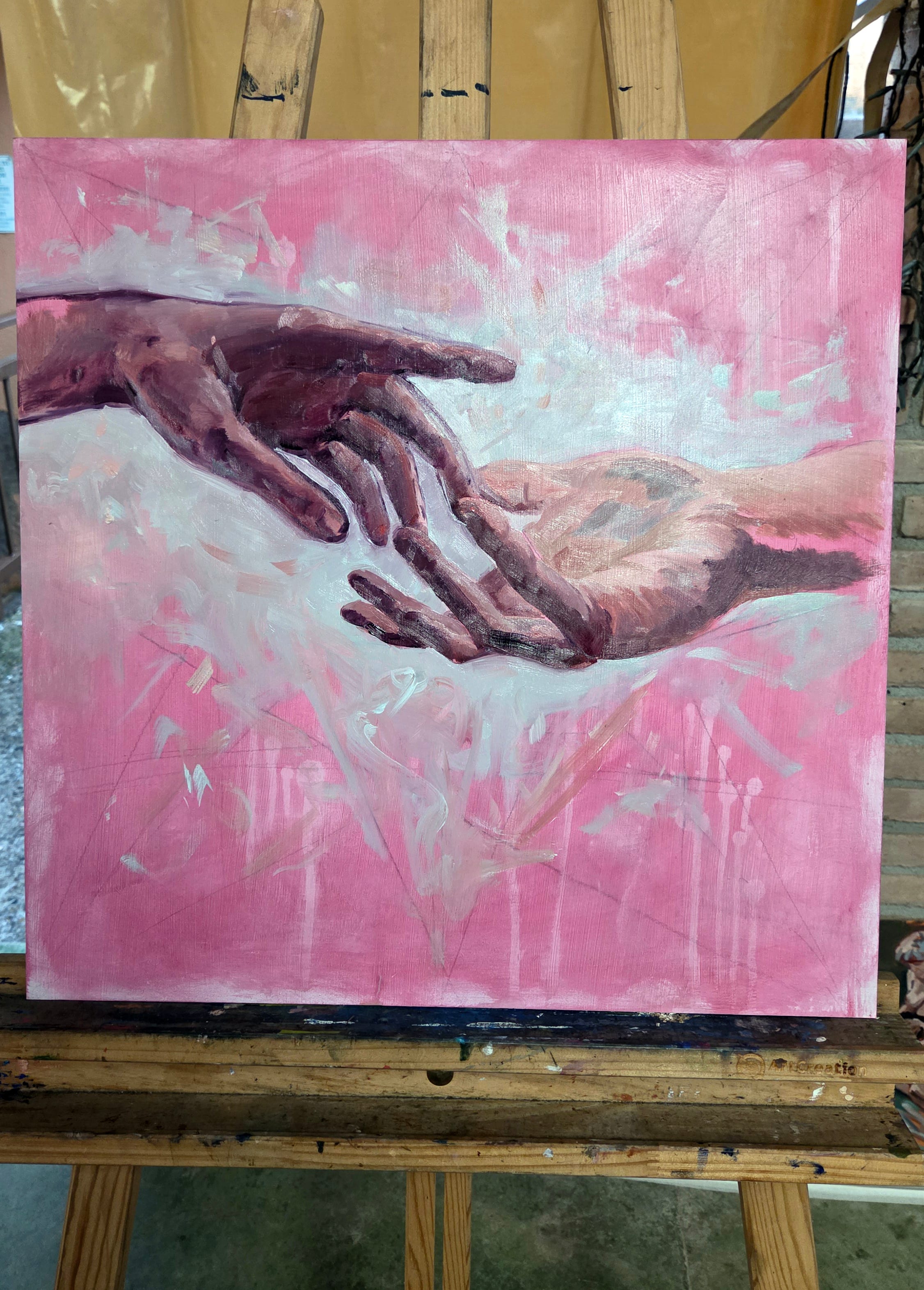
The painting only came together once I understood what was missing: Red. The heat of it. It was the passion the dreamer projects onto the dream; the longing made visible. Once I added the red, it flowed. The two hands were finally in conversation with each other, bound not by touch but by desire. The dreamer’s want was what gave the dream its light.
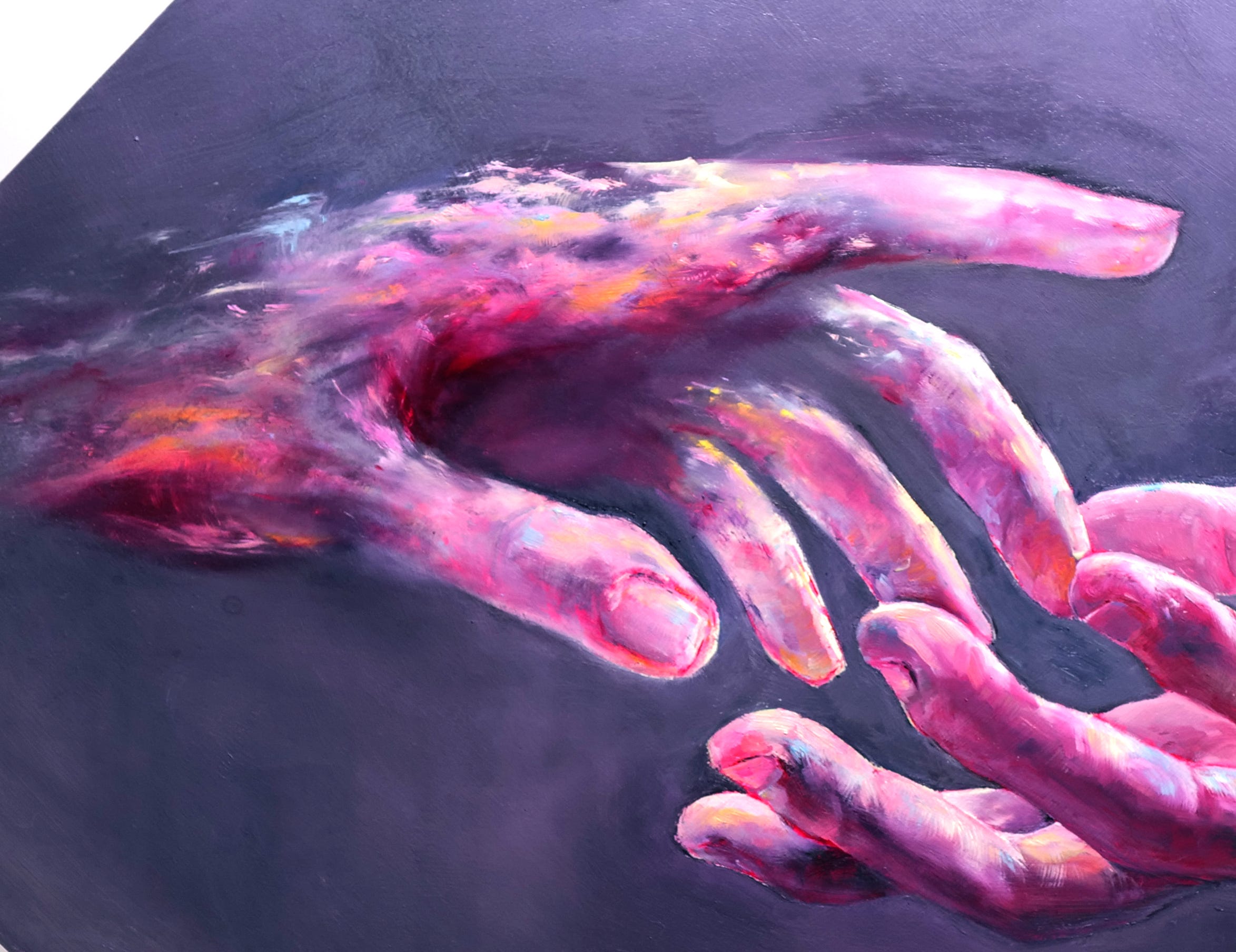
That was the painting.
My friend Emily recently wrote a beautiful piece on her Substack, Oops -- I Abandoned Capitalism, about the Buddhist distinction between love and attachment. She draws on the idea that most love songs aren’t really about love at all. They’re about wanting someone to complete you, to make you happy, to fill what is empty. Attachment looking for a host.
I think she’s right. I also think I am nowhere near enlightened enough to want do anything about it.
I like yearning. I have made a life and a practice out of it. I grew up the loneliest kid I knew and somewhere along the way I turned that into fuel. The longing for love and connection that never quite resolves is, for me, endlessly generative. It is where most of my paintings come from. This one included.
Emily seems to have found a measure of peace with all of this. I admire her for it. I also suspect I would have nothing to paint if I did the same.
So I will keep reaching. The hand in the dark keeps taking shape. I don’t want to wake up.
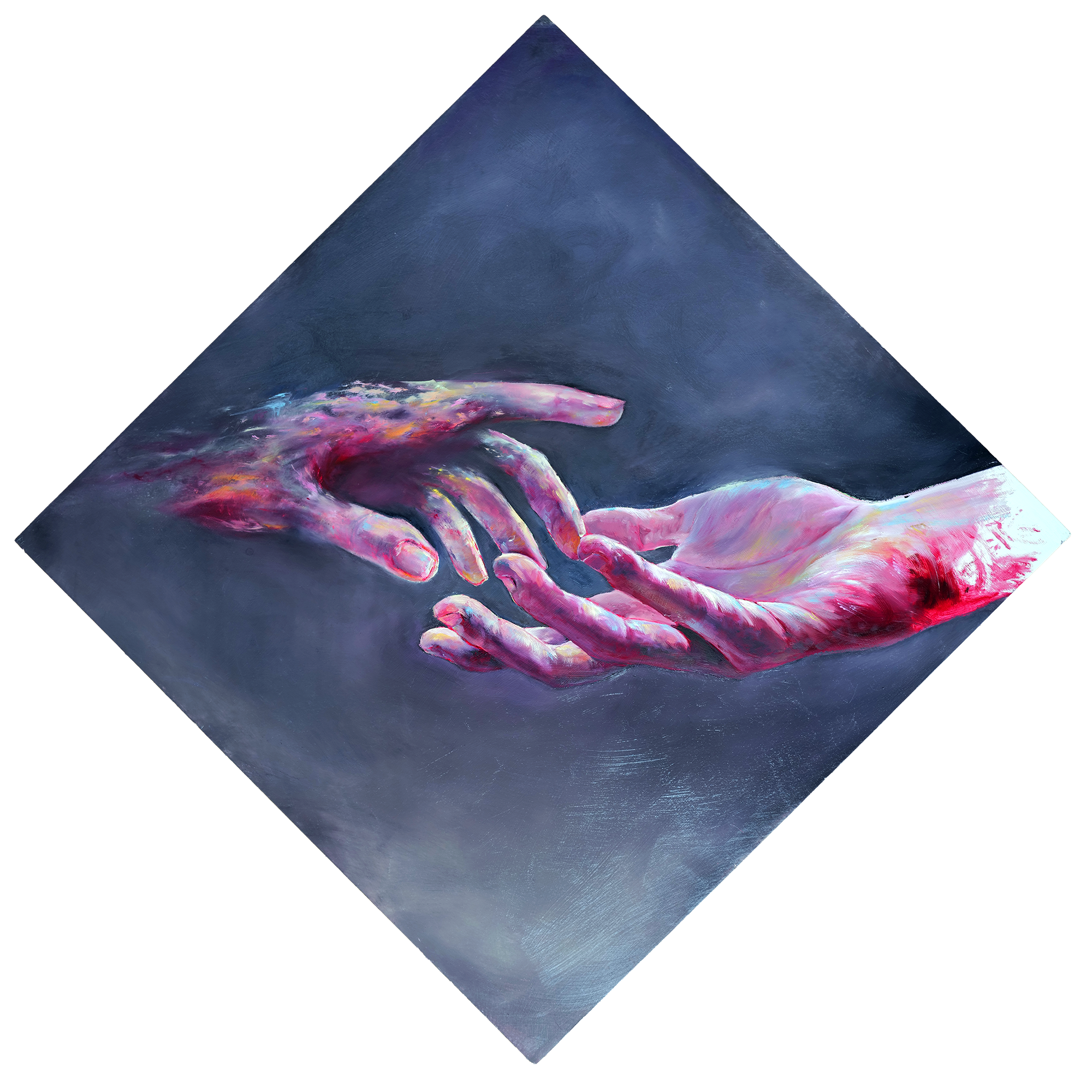
“I Don’t Want to Wake Up” (working title) oil on canvas, 2026. Part of the Confession series.
If you'd like to see more of my work, you can find my full portfolio at jessicacfisher.com. Galleries and collectors interested in the Confessions series or my broader practice are welcome to reach out directly at jessicacatfisher@gmail.com.
It’s a beautiful painting, and I’m excited to see more of your dreams take shape!